


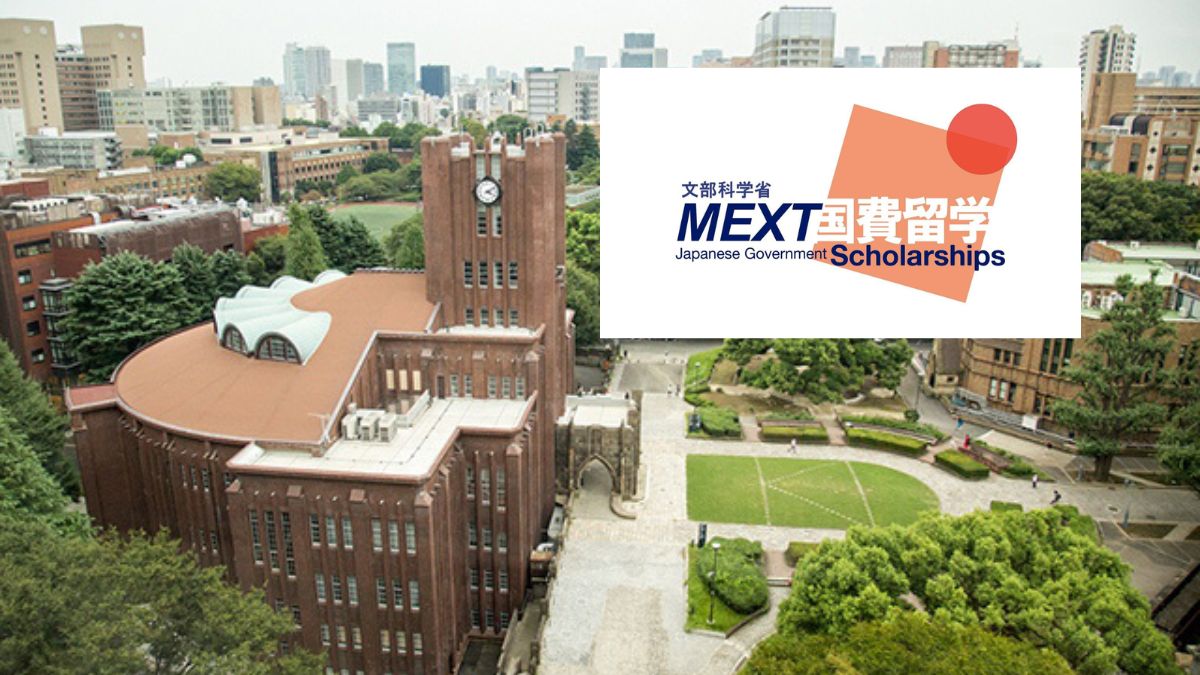
Each year, thousands of students go from MEXT Scholarship Japan 2027 Complete Application Guide Jakarta to Bogotá, Lagos to Lahore, and submit an application for a scholarship that the majority of their peers are unaware of. One of the few truly fully funded government scholarships remaining in the world is the MEXT Scholarship, supported by Japan’s Ministry of Education, Culture, Sports, Science, and Technology. No fees. A living stipend each month. round-trip airfare. Unusually, there was also no requirement to go back home and “serve” thereafter. Most applicants don’t realize how important that final element is. Many national scholarship schemes pay for your education and then expect you to leave. MEXT doesn’t. After paying for your study in Japan, it opens doors to permanent residency, a career in research, and employment in Japan. That completely alters the maths for anyone considering studying in Japan as a long-term relocation as opposed to a two-year excursion.
Japan’s generosity has its own motivations. The nation’s working-age population is declining, and there is a real scarcity of qualified workers, especially in the fields of engineering, healthcare, IT, and research. It is not charity to bring in gifted international students and provide them with a practical way to stay. It’s a policy.This article explains what the MEXT Scholarship actually covers, how to apply for the 2027 intake, and what occurs in the years following your arrival, a section that most guides omit.
Overview of Scholarships: What MEXT Really Includes
The two paths in
The most frequent mistake made by beginners is to confuse the two primary methods of winning a MEXT scholarship.The more popular approach is Embassy Recommendation. The Japanese embassy or consulate in your nation is where you submit your application. After screening you, the embassy sends the chosen applicants to MEXT in Tokyo for university placement and final selection. The first screening by embassies took place from May to July of 2026, while recruitment for the 2027 intake took place generally between April and May of that same year.
University Recommendation operates differently. A Japanese university accepts your straight application and nominates you for MEXT. You must first get in touch with a professor or program coordinator to take this option. University Recommendation deadlines for 2027 entry usually fall between September 2026 and January 2027; therefore, depending on the university, this course might still be available for 2027.Readers arriving in late 2026 should be aware that the Embassy Recommendation window for entrance in 2027 has typically already ended. If that’s the case, you have two practical choices: start getting ready for the 2028 Embassy cycle, which will open in April or May of 2027, or pursue a University Recommendation nomination for 2027. Being ready a year ahead of schedule is not a consolation award. To be honest, the best candidates do it anyhow.
Study categories
Research students (master’s, doctorate, and non-degree research), undergraduate students, students from specialized training colleges, and college of technology students are among the categories covered by the award. Engineering, medicine, the humanities, social sciences, and the arts are all acceptable fields.
What you get
MEXT is a really all-encompassing prize. Typically, recipients get:
Complete tuition reimbursement, together with entrance exam and admission costs
A monthly stipend is determined annually and varies by category. According to contemporary recommendations, undergraduate stipends are approximately ¥117,000, while research-student stipends are between ¥143,000 and ¥145,000.
Airfare from your native nation to Japan, round-trip
For those who require it, a beginning Japanese language education usually lasts six months.
No need for repayment or return service
Every year, stipend amounts and criteria are reviewed, so instead of depending on a blog post, including this one, always check the current numbers in the official application instructions.
In general, eligibility
Each category has different requirements, but generally speaking, candidates must be citizens of a nation having diplomatic ties to Japan, be within the age range given in the rules for that year, have the necessary academic credentials, and be in good health. The official rules are more important than summaries because age restrictions and academic criteria are subject to periodic revisions.
Application Procedure: A Comprehensive Guide
Step 1: Determine the real deadline in your nation
Most applicants falter at this point. There isn’t just one worldwide MEXT deadline. Every Japanese embassy and consulate has its own calendar, which varies greatly; some close in February, while others close in May or June. A deadline of 1 June 2026, with no extensions, was stated in one embassy’s public notice for the 2027 cycle. Always start by visiting the webpage of your own embassy.
Step 2: Carefully read the official guidelines
Every year, MEXT posts category-specific Application Guidelines on JASSO’s official Study in Japan website. Go through the entire document. Every year, candidates disqualify themselves due to requirements hidden on page four.Crucially, avoid sending paperwork straight to MEXT in Tokyo. Your embassy or consulate handles everything.
Step 3: Put your paperwork together
The standard set for the category of research students consists of:
The applicable fiscal year’s application form
A Placement Preference Application Form (MEXT makes the final placement choice, but you may indicate your preferred universities)
The most crucial document you will produce is your field of study and research plan.
Degree certificates and academic records
A Certificate of Health, filled out by a physician with a license
A letter of recommendation from your present or previous school
Step 4: Take the written tests
Applicants via the Embassy route usually take written exams that include English, Japanese language, and subject-specific papers related to their area. One of the best ways to make the most of your preparation time is to review past papers, which are accessible to the public.
Step 5: The interview
Interviews with the shortlisted applicants take place in the embassy. Anticipate inquiries about your study strategy, the rationale behind your particular choice of Japan, and your long-term goals. The quickest path to rejection is a vague response.
Step 6: Final placement and selection
Candidates recommended by the embassy are sent to MEXT in Tokyo for a final evaluation and university placement. Before leaving, you must finish the Certificate of Eligibility and visa processes.
Read More: How to Migrate to Italy – All You Need to Know
Academic and Professional Routes: What a Degree Really Gets You
Robotics, materials science, precision manufacturing, pharmaceuticals, semiconductors, and increasingly artificial intelligence and green energy are among the fields where Japan’s research ecosystem is deeply rooted and has global commercial significance. Japanese university laboratories typically have a close-knit culture, with a research group, or kenkyūshitsu, serving as both a social and professional network.The underappreciated asset is that network. Relationships with professors and universities are a major source of recruitment for the Japanese industry. In contrast to certain hiring markets in the West, corporate research units place significant weight on a supervisor’s recommendation.
Part-time employment is another option available to MEXT scholars. During the academic year, students are often permitted to work up to 28 hours a week with authorization from immigration authorities. Many take up tutoring, language instruction, or research support, which is beneficial for both earning money and developing the workplace Japanese that employers genuinely test for.A Japanese doctorate carries international respect for people who are not especially focused on Japan, and alum networks, such as the vast alum groups JASSO maintains throughout Asia and beyond, link graduates across dozens of nations.
The Part No One Can Prepare You For: Cultural Integration
In all honesty, the scholarship is the simple part. Living in Japan is a long-term endeavour.The true gatekeeper is language. You can learn functional survival Japanese in the six-month introductory course. It doesn’t advance you to the point where you can pass a corporate interview, negotiate a lease, or attend a lab meeting in Japanese. Students usually have more possibilities if they approach Japanese as a serious multi-year commitment rather than as a box to be checked in the first semester. A realistic and truly transforming goal is to aim for JLPT N2 prior to graduation.Systems are the foundation of daily existence. In the initial weeks, you will create a bank account, obtain a residence card, register your address at the municipal office, and sign up for National Health Insurance. Japan has a well-organized, paper-heavy, and frequently Japanese-only bureaucracy. Having patience is beneficial. Asking the international office at your university is a better option than speculating.
It requires conscious effort to integrate socially. Instead of spontaneous interactions, Japanese social life frequently takes place in organized groups, such as labs, clubs, and companies. Students who participate in community volunteer work, local sports clubs, or circles assimilate far more quickly than those who remain in the bubble of international students. The bubble is cozy. Additionally, it is a trap, which is the primary cause of some graduates quitting after five years, as they are still unable to conduct themselves professionally.A peaceful interlude is to be expected. The majority of long-term inhabitants report an initial period of curiosity, a more difficult period between months six and eighteen, and finally true settling. That decrease isn’t an indication that you made a mistake; it’s natural.
Immigration Prospects: From Long-Term Residency to Student Visas
This is where MEXT differs from most scholarships.
You come with a student residency status. From there, the route typically looks like this:status change following graduation. After landing a job, graduates typically apply to modify their residency status to Engineer/Specialist in Humanities/International Services, which is the typical category for white-collar professional work. Instead of leaving right away, graduates who haven’t found a job can frequently apply for a designated activity status, which gives them time to continue looking.Japan’s highly qualified professionals’ point-based system. Japan uses a points system that gives credit for age, salary, professional experience, academic background, and, most importantly, Japanese language proficiency. Reaching the threshold opens up several benefits, such as preferential immigration treatment and, for high scorers, a significantly quicker path to permanent residency than the typical requirement of long-term continuous residency.
The MEXT-to-residency route is structurally successful because of this. A Japanese degree, functional-to-strong Japanese, and several years of in-country residency are the three things that MEXT graduates usually bring to the workforce, exactly what the points system honors.Residency for life and beyond. In general, long-term continuous residency with the proper status, steady income, and compliance with social insurance and taxes are prerequisites for standard permanent residency in Japan. Professionals with a high level of expertise may qualify much more quickly. The naturalization process is distinct, more difficult, and has its own requirements.One obvious disclaimer: criteria differ depending on the specific situation, and immigration laws are subject to change. This is not legal advice. Verify current requirements with the Immigration Services Agency of Japan or an experienced immigration attorney before making judgments.
Useful Advice: What Differentiates Rejected Applications from Successful Applications
Begin a year ahead of schedule. It takes twelve months, not six weeks, to develop the best applications.Consider the research plan and field of study to be the focal point. Hundreds of these were read by reviewers. “Japan has advanced technology and I wish to learn from it” is an example of a generic plan that is easily forgotten. Identify a particular issue. Describe your suggested approach. Describe why Japan is the best place to conduct it, preferably in a specific lab.Make early contact with instructors, particularly if you plan to attend a university. An actual benefit is having a lecturer who is familiar with your work.Verify the deadline for your embassy. Aggregator websites, such as this one, should not be trusted. Deadlines are not extended and vary by nation.
Just because your program is in English doesn’t mean you should ignore the language test. Japanese proficiency influences immigration, employment, daily living, and selection. It makes a difference.Common errors that should be avoided include failing to sign the medical certificate, sending transcripts without verified translations, declaring extremely unrealistic university preferences, neglecting the written tests, and creating a research plan that could have been submitted to any nation in the world.Watch out for con artists. No agency can guarantee selection, and MEXT does not collect application fees for the scholarship itself. Only apply through the embassy’s proper methods.
Conclusion:
In conclusion, a scholarship that can purchase more than just a degree
The MEXT Scholarship has a high application burden and is highly competitive. Pretending otherwise is pointless. Few opportunities, however, provide this combination: a fully paid degree at a reputable research university, a monthly stipend that allows independent living, systematic language instruction, and, most importantly, a real, tried-and-true route to establishing a career in the nation following graduation. Students who look beyond the money are the ones who benefit the most from it. They acquire the language correctly. They form bonds with others in their area and lab. Instead of freaking out during their last semester, they consider the Japan immigration route from year one. You have the most precious asset an applicant can have if you read this before the 2028 Embassy cycle begins in the spring of 2027: time. Make use of it. Write the plan for the research. Start learning Japanese. Send a professor an email. Visit the page of your embassy. Japan is actively seeking individuals who are eager to construct anything there. The MEXT Scholarship is exactly what it sounds like.