

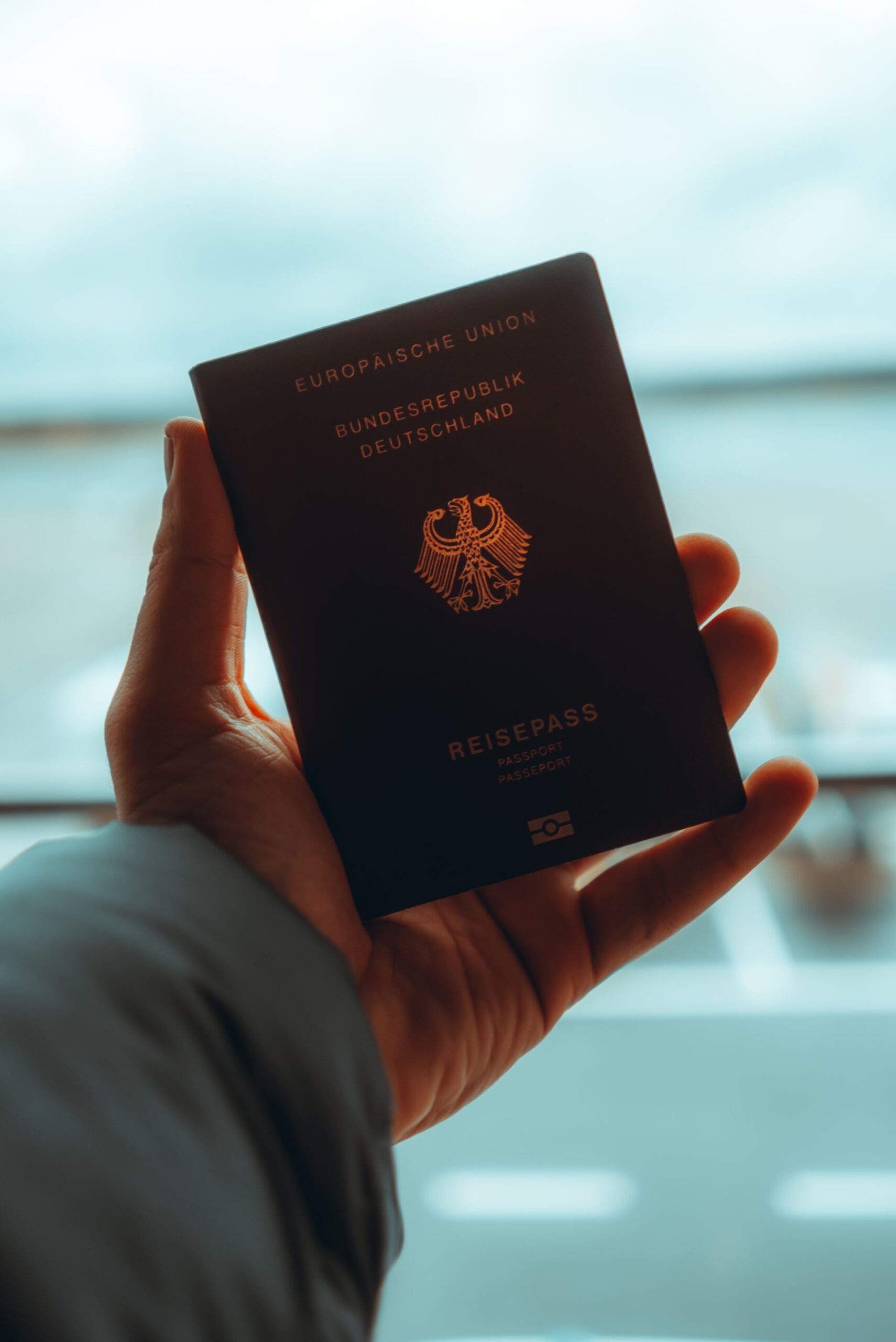
For most of modern history, becoming German meant giving something up. Until recently, Germany’s citizenship law asked naturalizing foreigners to surrender their old passport in most cases, a demand that stopped countless long-term residents, with deep German lives and German-raised children, from ever applying. Then came the most significant overhaul of German nationality law in a generation, and the equation changed: shorter waiting times, a fast track for the well-integrated, and, most consequentially, the general acceptance of dual citizenship.
If you’re working in Germany on a Blue Card, a skilled-worker permit, or a settlement permit, citizenship is the final rung of the immigration ladder, and the reformed rules make it reachable years earlier than before. But “reformed” doesn’t mean “automatic.” The requirements are specific, the documentation is demanding, and local naturalization offices (Einbürgerungsbehörden) are dealing with backlogs that make timing part of the strategy. This guide explains the current rules as they stand: what the reform changed, the standard five-year and fast-track three-year routes, who can now keep both passports, the language and test requirements, the application process step by step, realistic timelines, and the rules for children. Citizenship law can be amended, so treat the requirements below as the current framework and verify the published conditions with your local authority before you apply.
What the Reform Changed
The modernization of the Nationality Act, which took effect in mid-2024, rewrote three pillars of German naturalization. First, the standard residence requirement dropped from eight years to five, meaning a skilled worker who arrived, worked, and integrated can apply three years earlier than under the old law. Second, a fast-track route was created: three years of legal residence for applicants with exceptional integration achievements, such as outstanding language skills, academic or professional accomplishments, or civic engagement. Third, and most symbolically, the general obligation to give up the previous citizenship was abolished, dual and multiple citizenship are now broadly permitted for naturalizing foreigners, removing the single biggest psychological and practical barrier that kept application numbers low for decades.
Other changes mattered too. Children born in Germany to foreign parents acquire German citizenship at birth more easily: the parental residence requirement was reduced from eight to five years of legal residence (with a permanent residence right). The reform also adjusted provisions around language, self-sufficiency, and the naturalization test, and it introduced clearer rules on when the authorities can deny applications on grounds such as criminal convictions or extremist activity, the state is more welcoming, but not unconditional.
What the reform did not change: naturalization is still an application, not an entitlement that arrives by mail. You must meet every requirement, document everything, and pass through your municipality’s or district’s naturalization office. And because the reform made citizenship more attractive, application volumes surged, many offices now have waiting lists measured in months before they even open your file. The reform shortened the legal wait; the administrative wait is a separate matter you’ll need to plan around.
The Standard Five-Year Route: Requirements in Detail
The standard route requires five years of legal habitual residence in Germany at the time of application. “Legal” is doing real work in that sentence: periods on irregular status don’t count, and the residence must be lawful throughout. Short absences (holidays, business trips) don’t break continuity, but long absences can, if you’ve spent extended periods outside Germany, get clarity from the authority before counting your years.
Beyond residence, the core requirements are: a valid residence permit at the time of naturalization (settlement permit, EU Blue Card, or another qualifying permit, check that your specific permit type qualifies, as not every permit does); the ability to support yourself and your dependents without recourse to certain public benefits (there are exceptions for circumstances beyond your control, such as illness or care responsibilities, but the self-sufficiency bar is real and documented through pay slips, tax assessments, and employment contracts); sufficient German language skills, generally B1 of the Common European Framework, proven by certificate; passing the naturalization test (Einbürgerungstest), which covers the legal and social order and living conditions in Germany; a clean criminal record (minor infractions are assessed individually; serious convictions disqualify); and a declaration of loyalty to the free democratic basic order.
Each requirement has evidentiary standards that vary slightly by state and office. Language certificates must come from recognized providers. The self-sufficiency proof typically covers a defined recent period, assemble pay slips, employment contracts, and tax notices accordingly. And the residence permit requirement means timing matters: don’t let your permit lapse while the application is pending; keep your immigration status clean throughout the process.
One timing subtlety catches applicants every year: the residence clock is measured at the moment of the decision, not the application. If you apply at four years and eleven months hoping the processing time carries you over five years, some offices will simply park your file until the requirement is met, and others will treat the premature application as a reason for extra scrutiny. The safer play is to apply once you’ve clearly crossed the threshold, with the documentation to prove every month of it. Similarly, if you’re close to qualifying for the settlement permit and haven’t yet applied, consider sequencing: some applicants secure the settlement permit first (locking in their long-term status) and then file for naturalization from that stronger position. The settlement permit isn’t a formal prerequisite for the five-year route in every case, but holding it removes an entire category of questions about the sustainability of your residence.
The Fast-Track Three-Year Route
Three years to a German passport sounds dramatic, and it is, but the bar is deliberately high. The fast-track route requires three years of legal residence plus exceptional integration achievements. What counts as “exceptional” is assessed by the authority, but the categories in the law point clearly: particularly good German language skills (well above B1, think C1), outstanding academic, professional, or vocational achievements, or significant civic engagement (ehrenamtliches Engagement) such as sustained voluntary work.
In practice, this route suits a specific profile: the researcher with C1 German and a strong publication record, the engineer whose professional achievements are documented and exceptional, the long-term volunteer with verifiable civic engagement alongside strong language skills. It’s not a route you stumble into; it’s one you build toward deliberately. If you’re aiming for it, start early: language certificates take time, civic engagement must be sustained and documented (not a last-minute scramble), and professional achievements need evidence.
A word of realism: because the criteria involve judgment, outcomes vary between offices, and some authorities interpret “exceptional” strictly. If your case is borderline, the standard five-year route with solid documentation is the safer bet, two extra years of waiting beats a refused application and the appeal process. Consider the fast track if your integration record is genuinely outstanding and documented; otherwise, let the five-year route do its quiet work.
Dual Citizenship: Who Can Keep Both Passports Now
This is the reform’s headline change, and it deserves precision. Under the reformed law, naturalizing foreigners are generally no longer required to renounce their previous citizenship, dual (and multiple) citizenship is now the default outcome of German naturalization. This removed the painful choice that kept hundreds of thousands of eligible residents from applying: keep your parents’ citizenship or become German.
There are nuances worth knowing. First, the other country’s law matters as much as Germany’s: some states automatically strip citizenship when you voluntarily acquire another nationality. Germany allowing dual citizenship doesn’t stop your country of origin from applying its own rules, check your home country’s nationality law before assuming you’ll hold both. Second, the reform’s transitional provisions and the interaction with older cases (people naturalized under the old renunciation regime) have their own rules. Third, for children, the previous “option obligation” (Optionspflicht), which forced certain dual-citizen children to choose one nationality by age 23, was abolished; they can keep both permanently.
The practical effect has been enormous: naturalization applications rose sharply after the reform, which is both a signal of the change’s popularity and a warning about processing backlogs. If dual citizenship was ever your reason for not applying, that reason is now gone in German law, verify your other country’s stance, and the path is open.
Language, Einbürgerungstest and Self-Sufficiency
Three requirements deserve a closer look because they’re where applications most often stall: language, the test, and the money.
German at B1 level is the standard requirement, the ability to handle everyday life independently: conversations, official correspondence, workplace communication. The certificate must come from a recognized examination provider (Goethe-Institut, telc, TestDaF-institute examinations at the relevant level, among others). Exemptions exist for certain cases, applicants who completed German schooling, for example, but don’t assume you qualify; confirm with the office. For the fast track, aim well above B1, since language is one of the explicit exceptional-integration criteria.
There’s a practical sequencing point here that many applicants get backwards: they treat the language certificate as the last item to collect, then discover the exam dates don’t fit their application timeline. Do the opposite. Book the B1 (or higher) examination early in your preparation year, certificates don’t expire for naturalization purposes in the way some applicants fear, and having it in hand removes the single most common reason files sit incomplete. If you’re between levels, take the higher exam you’re confident of passing rather than retaking a lower one; a B2 certificate where B1 was required never hurts, and for anyone eyeing the fast track it’s practically expected. Preparation courses at adult education centers are affordable and structured around exactly these examinations.
The naturalization test (Einbürgerungstest) consists of 33 multiple-choice questions drawn from a published catalogue covering German law, history, society, and the federal state’s specifics; you need 17 correct answers. The catalogue is public, preparation materials are everywhere, and the test is offered regularly at adult education centers (Volkshochschulen) and other licensed providers. It’s genuinely passable with a few weeks of preparation, but schedule it early, because test dates fill up and the certificate is a mandatory part of your file.
Self-sufficiency means demonstrating that you (and your dependents) live from your own income without relying on certain public welfare benefits. The evidence: employment contracts, recent pay slips, income tax assessments, and, for the self-employed, business evaluations and tax records. Gaps in employment aren’t automatically fatal, parental leave, illness, and study periods are assessed in context, but undocumented or unexplained reliance on benefits is. If your situation is complex (freelance income, recent job change, a spouse’s income as the household basis), assemble the documentation carefully and consider getting advice before filing.
Documents and the Application: Step by Step
The application goes to the naturalization authority where you live, typically the municipal or district administration (check your city’s website for the exact office; in larger cities there are dedicated Einbürgerung offices). Many offices now use online application portals or appointment systems; walk-in applications are increasingly rare. Start by checking your local office’s current procedure, because it determines everything that follows.
The document checklist, in practice: valid passport and current residence permit; proof of five (or three) years of legal residence (registration certificates/Meldebescheinigungen, old permits); birth certificate (with certified translation if not in German); marriage certificate and children’s birth certificates if applicable; language certificate (B1 or higher); naturalization test certificate; proof of income and self-sufficiency (employment contract, pay slips, tax assessments); pension insurance history if relevant; and, where applicable, proof of the exceptional integration achievements for the fast track. Non-German documents need certified translations; some offices require apostilles for foreign civil-status documents.
The process runs: submit the application with documents (or attend the initial appointment) → the office checks completeness and may request supplements → background checks run → the decision is issued → on approval, you receive the naturalization certificate (Einbürgerungsurkunde), often in a small ceremony, and become a German citizen at the moment of handover. Fees apply; check the current published figure with your office (reductions exist for minors co-naturalizing with parents and in hardship cases). Keep copies of everything you submit, files do get lost in backlogged offices.
Processing Times and Common Delays
Honest numbers: with post-reform application volumes, many naturalization offices quote twelve to twenty-four months from complete application to decision, and some major cities run longer. The timeline has three phases: the wait for your file to be opened (the backlog queue), the substantive examination (usually a few months once an officer picks it up), and the final steps (ceremony scheduling). The queue is where most of the time goes.
What causes avoidable delays: incomplete files (the single biggest factor, every supplement request resets your position in the officer’s workflow); untranslated or uncertified documents; unclear residence history (gaps that need explaining); and applying before you actually meet the requirements (offices check, and premature applications waste everyone’s time). What you can control: submit a complete, indexed, translated file; respond to queries within days, not weeks; and keep your contact details current so nothing stalls on a missed letter.
If your application exceeds the office’s published processing times significantly, you have options: a formal inquiry (Sachstandsanfrage), escalation through the office’s complaints channel, and ultimately legal remedies, but use these proportionally. A polite, documented inquiry after the stated timeframe is normal; aggressive escalation at month four is not. And plan your life around the timeline: don’t schedule irreversible commitments (like renouncing anything, or major travel requiring consular services as a German) until the certificate is in hand.
One more scenario worth planning for: the request for additional documents mid-process. Even complete files sometimes draw follow-up questions, a tax year the officer wants clarified, an employment gap that needs a sentence of explanation, a translation the office wants re-certified. Treat these as routine rather than alarming, and respond fast and completely. Applicants who answer within days keep their file moving; applicants who let queries sit for weeks discover that officers move on to other files and the clock restarts. Keep a dedicated folder, physical or digital, with every document you submitted plus spares, so a supplement request is an afternoon’s work, not a month’s archaeology.
Citizenship for Children Born in Germany
Children’s citizenship under the reformed law is more generous than before, and it’s worth understanding even if your own application is years away. A child born in Germany to foreign parents acquires German citizenship at birth if at least one parent has been legally resident in Germany for five years (reduced from eight by the reform) and holds a permanent right of residence at the time of birth. This is automatic, no application needed, though you’ll want the documentation in order for the birth registration.
Children who don’t acquire citizenship at birth can be co-naturalized with their parents’ application (Miteinbürgerung), usually at reduced fees and with relaxed requirements (no separate language test for young children, for example). And the old “option model” is gone: children who hold German citizenship alongside another nationality through birth no longer have to choose between them at age 23, dual citizenship is permanent.
For parents, the strategic point: your path to the settlement permit and citizenship directly shapes your children’s citizenship outcomes. The five-year parental residence clock for birthright citizenship runs on legal residence, the same clock as your own naturalization timeline. Families planning long-term in Germany should map both timelines together, not separately.
Frequently Asked Questions
How long must I live in Germany before I can apply for citizenship? The standard route requires five years of legal residence; a fast-track three-year route exists for applicants with exceptional integration achievements (such as C1-level German, outstanding professional or academic records, or significant civic engagement). Verify the current published requirements with your local naturalization office, as implementing rules can change.
Can I keep my original citizenship when I become German? Under the reformed law, Germany generally no longer requires renunciation, dual citizenship is the default. However, your other country’s law may still strip your citizenship when you naturalize elsewhere, so check your home country’s rules before applying.
Do I need to speak German to naturalize? Yes, generally B1 level proven by a recognized certificate, plus the naturalization test (Einbürgerungstest). Exemptions exist in limited cases. For the three-year fast track, language well above B1 strengthens the case significantly.
How long does the application take to process? Many offices currently quote twelve to twenty-four months from a complete application, with longer waits in major cities due to post-reform demand. Submit a complete, translated, well-organized file to avoid adding months of supplement rounds.
Will my children become German citizens too? Children born in Germany acquire citizenship at birth if a parent has five years of legal residence plus a permanent residence right. Children can also be co-naturalized with a parent’s application, and the old requirement to choose one nationality at 23 has been abolished.
Conclusion
German citizenship under the reformed law is the most accessible it has ever been: five years instead of eight, a three-year fast track for the exceptionally integrated, and, the change that matters most to the most people, the general acceptance of dual citizenship. The door that stayed shut for decades, the one marked “surrender your old passport,” is now open.
But open doors still have thresholds. The requirements are exact, the documentation is heavy, and the offices are busier than ever. The applicants who succeed treat naturalization as a project: they track their residence years, certify their German early, pass the test before they need it, keep their employment and tax records immaculate, and submit a file so complete the officer has nothing to ask for. Start that project now, whatever year of residence you’re in, because the five-year clock is already running, and every prepared month is a month closer to the certificate. Verify the current published conditions with your local Einbürgerungsbehörde before filing, and plan for the administrative timeline, not just the legal one. The passport at the end is worth the paperwork.