


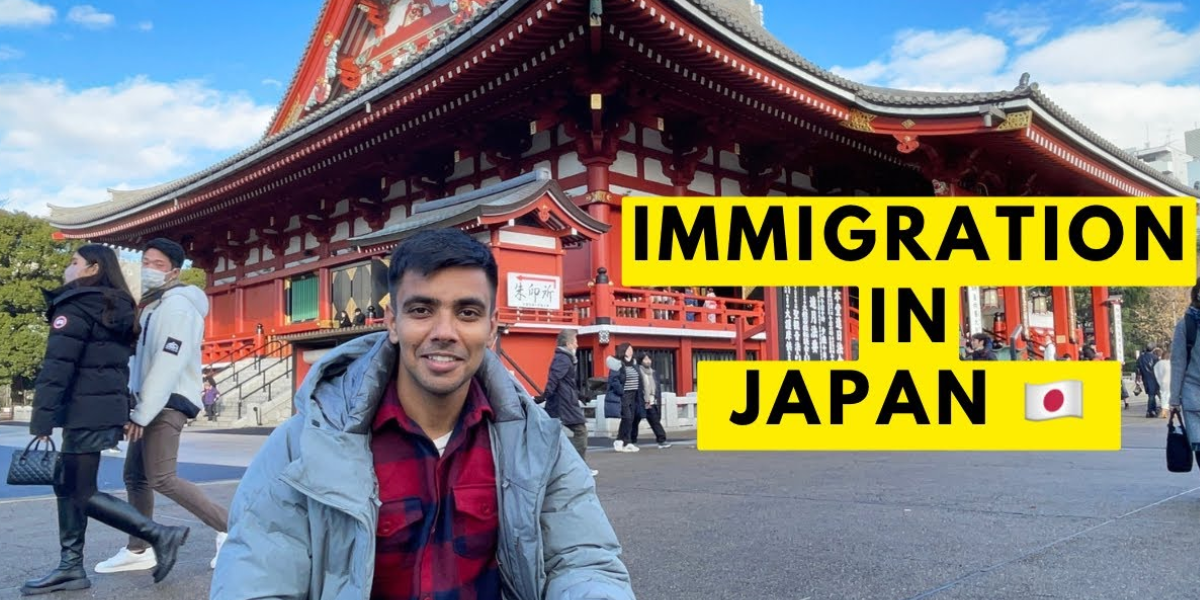
In January, the Immigration Policy of Japan Complete Guide, the Japanese government published a 98-page policy paper that details a significant change in how Japan handles immigration, foreign residents, and social integration. This does not mean that Japan is closing its doors. This means integration will be more important than ever, regulations will be clearer, and enforcement will be stricter. One of the most significant changes in recent years, Japan’s immigration policy demonstrates a clear move toward digital administration, compliance, and organised integration. All visa categories, students, labourers, and entrepreneurs, now have stricter screening processes, and the government has also made it easier for talented and semi-skilled immigrants to advance to permanent residency. To make access and monitoring easier, Japan is also embracing digitisation by expanding e-VISA services and integrating resident cards into the MyNumber system. Additionally, the new Employment for Skill Development framework replaces the old Technical Intern Training Program, indicating a shift away from temporary placements and toward true labour integration. Stricter capital requirements and compliance inspections demonstrate Japan’s emphasis on national security and openness for companies and entrepreneurs. Overall, these revisions balance transparency and responsibility, aiming to attract talent that benefits society while maintaining regulations against abuse or overstaying. With its updated immigration policy, Japan is positioned as a nation that prioritises both social responsibility and economic contributions.
Immigration Process
Immigration Policy of Japan Complete guide, The revisions have made Japan’s immigration procedure more organised and digitally controlled. Applicants must now navigate a system that prioritises compliance, paperwork, and integration assistance, regardless of whether they are employees, entrepreneurs, or students. Securing the proper visa category is the first step in the process, and it requires more thorough documentation and stringent scrutiny. After arriving in Japan, foreign residents are required to maintain their legal residency status, fulfil their insurance and tax obligations, and integrate through language and cultural programs. Digital technologies that streamline applications and monitoring, including the MyNumber system and eVISA platforms, are essential to the process.
Important Points of the Japan Immigration Process
Application for a Visa
- Select the appropriate category of visa (student, skilled worker, entrepreneur, etc.).
- Please send in the necessary paperwork, including your passport, application, proof of finances, and sponsor information.
- More thorough eligibility and compliance checks are part of the tighter screening process.
Eligibility Certificate (COE)
- A COE from the Immigration Services Agency is necessary for the majority of long-term visas.
- Typically, sponsors, employers, or educational institutions apply on the applicant’s behalf.
Residence and Entry Card
- Get a Residence Card at the airport upon arrival.
- It is connected to the MyNumber system for digital tracking and must be carried at all times.
Insurance and Registration
- Within 14 days, register your address at the local municipal hall.
- Enrol in the pension and National Health Insurance programs.
- Permanent residence and renewal applications require tax compliance.
Rules for Work and Study
- Employees, make the switch from Technical Intern Training to the Employment for Skill Development (ESD) framework.
- Schools closely monitor students’ part-time employment and enrolment, ensuring compliance with visa status requirements.
Status Changes & Renewals
- Proof of continued eligibility (work, education, and financial stability) is necessary for renewal.
- Changes in status (e.g., student to worker) require stringent paperwork and employer verification.
Pathways & Permanent Residency
- The path to permanent residency is now more obvious for skilled and semi-skilled workers.
- This path requires long-term residency, tax compliance, and cultural and linguistic assimilation.
Digital Tools eVISA for temporary admission.
- For expedited arrival processes, visit Japan Web.
- MyNumber and Residence Card are integrated into a single digital management system.
Four Core Facts Shaping Policy
Huge Inflows of Migrants
- Japan currently welcomes more than 300,000 net immigrants each year, making it one of Asia’s top receivers of foreign migration among developed countries.
- Due to labour constraints and demographic decline, this policy represents a change from its previous restrictive posture.
The Program for Specified Skilled Workers (SSW)
- The SSW programme, introduced in 2019, gave semi-skilled migrants access to 16 industries, including caregiving, construction, agriculture, and food service.
- SSW-1, No family accompaniment, renewable for up to five years.
- SSW-2, A route to family privileges and permanent residency.
- Japan employed 1,351 SSW-2 workers and 293,000 SSW-1 workers by 2025, indicating rapid growth.
Integration & Permanent Residency
- As of 2024, Japan had about 1 million permanent residents.
- Education and work are the primary means of integration, and income disparities gradually close.
- To improve long-term settlement, international students frequently enter Japan’s labour market through graduate recruitment.
Prospects for Migration
- Asia’s growing prosperity will boost migration potential and desires.
- By 2040, migration flows to Japan are expected to quadruple, particularly from the Philippines, Vietnam, and Myanmar.
- Japan will continue to rely on foreign labour because of its declining population.
Policy Characteristics
A careful yet practical balance between regulation and openness characterises Japan’s immigration policy. The system is fundamentally neoliberal. Immigration Policy of Japan Complete Guide, especially with the implementation of the Specified Skilled Worker (SSW) programme, which permits semi-skilled foreigners to work in labour-shortage industries. This is a significant change from Japan’s traditional, restrictive approach. To ensure that migrants can progressively integrate into society and eventually reduce pay disparities, the strategy also emphasises integration through employment and education. The framework is also economically motivated, with labour shortages and population decline driving the main reasons for opening doors to foreign workers and students. In spite of these developments, Japan continues to be selectively open, carefully controlling immigration while increasing chances for long-term settlement and permanent residency. The strategy is essentially practical: it maintains a careful, regulated approach to who is allowed in and how they integrate, while acknowledging the importance of immigration to Japan’s future.
Integration and Labor Market Effects
- Educationally Channelled Migratory Process: Lump-sum new-graduate recruitment is a common way for international students to enter the domestic labour market. This process serves as a gateway, enhancing their chances of long-term integration and linking educational experience with employment.
- Wage and career trajectories are also affected by the migratory process. When migrants stay with the same company and advance through internal channels, wage discrepancies between them and locals decrease; however, changing workplaces can exacerbate disparities.
- Also, employment segmentation shapes labour market outcomes. Migrants work in positions ranging from highly qualified professionals to semi-skilled SSW and TITP workers, which affects labour costs and staffing plans.
Important Programs and Routes
The Specified Skilled Worker, Technical Intern Training, international study, professional employment categories, and pathways to permanent residency are the main entry and settlement routes in Japan’s immigration system, which is structured around purpose-driven statuses. These initiatives influence who can enter, what they can achieve, and how they can adapt to prolonged stays. Japan’s primary immigration pathways are purpose-driven: the Technical Intern Training (TITP) and Specified Skilled Worker (SSW) programs target labour shortages, while professional and international student visas provide pathways to skilled employment and, eventually, permanent residency. Recent policy changes, such as a sizeable SSW expansion plan, make these pathways the most practical means of employment and settlement. (At 22:00 PKT on June 22, 2026, the user is in Khyber Pakhtunkhwa.)
Final Thoughts
To address labour shortages and maintain social cohesion, the immigration policy of Japan Complete guide Japan’s immigration policy has shifted from cautious exclusion to pragmatic, targeted openness. Stronger student-to-work paths, revisions to technical training, and the Specified Skilled Worker programme provide gradual pathways from short-term admission to long-term settlement, but success requires good language instruction, skill recognition, and workplace rights to avoid exploitation. To convert inflows into long-term human capital, economically motivated admissions must be combined with integrating services, including housing, education, job mobility, and regional labour planning. In terms of politics, Japan will continue to strike a balance between practical demands and selective control, increasing intake in areas of high demand while maintaining sectoral restrictions. Clear planning enhances outcomes for migrants by aligning purpose with pathway, meeting language and test requirements, and documenting transitions. To optimise the benefits of migration and assist Japan in managing its demographic decline without compromising social stability, officials should prioritise talent validation, worker rights, and local integration.